Best ERP Software for Wholesale Distribution in 2025–2026 (Top 5 Picks)
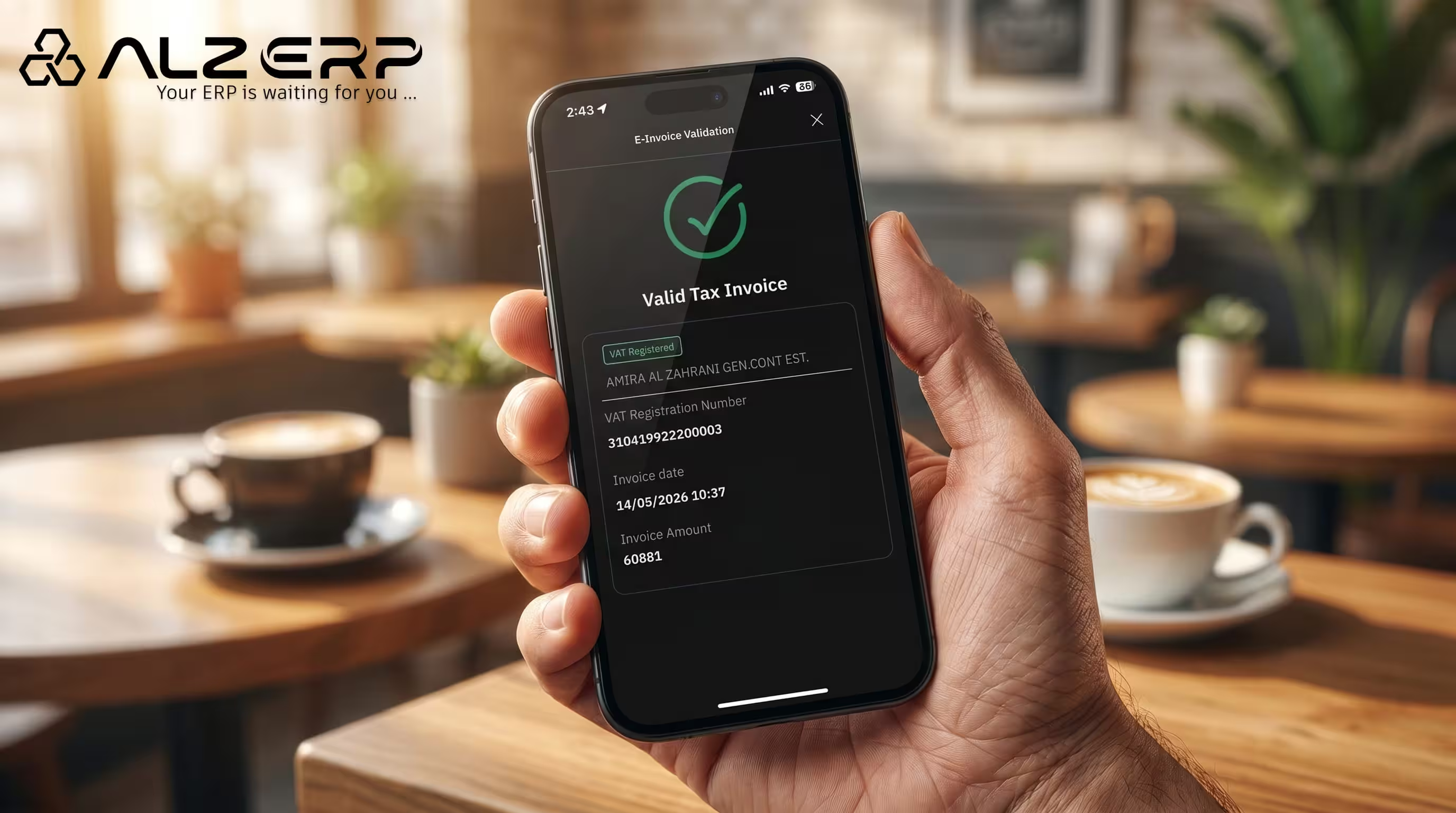
Best ERP Software for Wholesale Distribution in 2025–2026 (Top 5 Picks)
Wholesale distribution is one of the most operationally demanding business models: thin margins, complex inventory flows, multi-location logistics, and — in Saudi Arabia — mandatory ZATCA e-invoicing compliance. Choosing the wrong ERP in 2025 means fighting your own software instead of growing your business.
This guide ranks the best ERP software for wholesale distribution based on feature depth, regional compliance, implementation speed, and real total cost of ownership. We start with the requirements, then rank the top 5 systems head-to-head.
[Image: Wholesale distribution ERP dashboard showing inventory across multiple warehouses]
Must-Have Features for a Wholesale Distribution ERP in 2025
Before comparing systems, lock in your non-negotiables. A wholesale distribution ERP must handle:
- Real-time inventory tracking: Barcode/RFID scanning, stock-level alerts, and lot/batch traceability across all locations.
- Multi-warehouse management: Stock transfers, inter-warehouse requisitions, and zone-level bin tracking.
- B2B customer portal: Online order placement, account statements, and credit-limit visibility for your wholesale buyers.
- ZATCA e-invoicing (Saudi Arabia): Phase 1 QR code generation and Phase 2 real-time API clearance — mandatory under ZATCA's Fatoora project.
- Sales rep route management: Field rep assignment to customer routes, visit scheduling, order capture on mobile, and daily cash reconciliation.
- Purchase order & supplier management: PO workflows, GRN tracking, supplier ledgers, and landed cost allocation.
- Financial consolidation: Multi-currency GL, branch-level P&L, and automated VAT reporting.
- Demand forecasting & reorder automation: Historical analysis-based minimum stock triggers and purchase suggestions.
Top 5 ERP Systems for Wholesale Distribution: Ranked
| Rank | ERP System | Best For | ZATCA | Starting Price (SAR/yr) | Implementation Time |
|---|---|---|---|---|---|
| #1 | ALZERP | Saudi & GCC wholesale/distribution SMEs | ✅ Phase 1 & 2 native | From 14,000 | 2–6 weeks |
| #2 | Odoo | Tech-savvy teams needing flexibility | ⚠️ Via module | 18,000+ | 3–6 months |
| #3 | SAP Business One | Mid-to-large enterprises, complex reporting | ⚠️ Via partner add-on | 60,000+ | 6–18 months |
| #4 | Microsoft Dynamics 365 | Microsoft-ecosystem enterprises | ⚠️ Via partner | 80,000+ | 6–24 months |
| #5 | GoFrugal | Retail-focused distribution | ⚠️ Limited | 20,000+ | 4–8 weeks |
#1 ALZERP — Built for GCC & Saudi Wholesale Distribution
ALZERP is the highest-ranked ERP for wholesale distribution in Saudi Arabia and the broader GCC for 2025–2026 because it is the only platform on this list purpose-built for the region's specific requirements.
Why ALZERP leads:
- Native ZATCA compliance: Full Phase 1 and Phase 2 integration is built into the core product — no third-party middleware, no add-on modules, no additional cost. Start with the free ZATCA QR code generator to test the engine.
- SR Route management: The most sophisticated sales-rep routing and daily-van-sales management module available in an Arabic-first cloud ERP. Field reps capture orders on mobile; the system auto-reconciles against warehouse dispatch.
- Multi-warehouse intelligence: Real-time visibility across unlimited locations. Inter-warehouse transfers, damage tracking, and stock distribution are natively supported — not bolt-ons.
- Arabic-first, English-capable: Fully bilingual RTL/LTR interface means no translation gaps or display issues with Arabic data in reports.
- Speed of implementation: Live in 2–6 weeks versus the multi-month projects required for SAP or Dynamics.
Explore the full distribution feature set at Cloud ERP for Distribution Companies in Saudi Arabia.
#2 Odoo — Flexible but Requires Heavy Customization
Odoo is an open-source ERP platform with hundreds of modules covering distribution, accounting, eCommerce, and more. It is genuinely powerful for businesses with in-house developers or a strong implementation partner.
For Saudi wholesale distributors, the challenge is ZATCA. Odoo's ZATCA Phase 2 integration requires a certified community or commercial module, adding 20,000–40,000 SAR to implementation cost and 2–4 months of additional work. Arabic RTL layout issues in reports and invoices are a recurring complaint from GCC customers.
#3 SAP Business One — Enterprise Power, Enterprise Price
SAP Business One is a mature ERP with deep analytics, manufacturing integration, and a global support network. For Saudi wholesale distributors with 50+ users and complex reporting requirements, it is a credible choice.
The barriers are cost and time. Licensing runs SAR 15,000–25,000 per user annually, implementation typically takes 6–18 months, and ZATCA localization requires a certified SAP partner add-on. For the typical mid-market distributor generating SAR 20–200 million in annual revenue, the ROI timeline often extends beyond 3 years.
#4 Microsoft Dynamics 365 — Best for Microsoft Ecosystems
Dynamics 365 Business Central or Supply Chain Management integrates seamlessly with Power BI, Teams, and Excel — a major advantage for companies already deep in the Microsoft stack. ZATCA localization is available through Microsoft-certified partners in Saudi Arabia.
Complexity is the trade-off: implementation projects routinely run 6–24 months, and per-user costs accumulate quickly. Like SAP, it is best suited for larger enterprises (SAR 500M+ revenue) where the feature depth justifies the investment.
#5 GoFrugal — Retail-Focused Distribution
GoFrugal serves retail chains and FMCG distributors primarily in India, with some Middle East deployments. Its strengths lie in POS speed and simple inventory. ZATCA compliance support is limited compared to ALZERP, and Arabic-first UI is not a core design principle. It can be a fit for smaller operations with simple distribution needs and limited budget.
Why the Middle East Needs a Localized ERP
Generic ERP platforms built for Western markets frequently underperform in Saudi Arabia and the GCC due to:
- VAT & ZATCA: Saudi VAT (15%) and the mandatory Fatoora e-invoicing schema are unique. Systems not built with these in mind require expensive customization.
- Arabic language & RTL layout: Invoices, reports, and customer communications in Arabic require genuine RTL support, not just text direction switching.
- SAR currency & local banking: Integration with Saudi payment networks (Mada, SADAD) and compliance with SAMA regulations require local knowledge.
- Hijri calendar: Many Saudi government documents and contracts reference the Hijri calendar. ERP systems should handle both Hijri and Gregorian dates natively.
- Local support: WhatsApp-based support in Arabic is the communication standard Saudi businesses expect — not an English-language ticketing system with a 48-hour SLA.
ERP Trends for 2026: What to Expect
According to Gartner's cloud ERP market analysis, the following trends will shape wholesale distribution ERP in 2026:
- AI-powered demand forecasting: ML models analyzing sales history, seasonality, and external market signals to auto-generate purchase orders, reducing overstock by 15–30%.
- IoT warehouse integration: Smart shelving, automated picking systems, and real-time temperature/humidity monitoring feeding directly into ERP inventory records.
- Embedded analytics dashboards: Real-time margin analysis, customer profitability, and route efficiency metrics without exporting to Excel.
- E-commerce integration: B2B buyers placing and tracking orders through customer portals connected live to ERP inventory and credit limits.
- ZATCA Phase 2 full enforcement: By 2026, all VAT-registered businesses in Saudi Arabia will be under Phase 2 obligations. Systems not natively integrated will face mounting compliance risk.
Buyer's Checklist: 10 Must-Ask Questions Before Choosing a Wholesale Distribution ERP
- Does the ERP have native ZATCA Phase 1 and Phase 2 integration certified by ZATCA?
- Can the system manage unlimited warehouses and locations without additional module fees?
- Is there a mobile app for field sales reps to capture orders and collect payments?
- How does the ERP handle Arabic invoicing, RTL reports, and Hijri date support?
- What is the total implementation timeline, and who owns the data migration?
- Does the vendor have a local Saudi support team available in Arabic?
- Can the system integrate with my existing Saudi bank and payment network (Mada, SADAD)?
- What is the contract structure — monthly SaaS, annual, or perpetual license?
- How often are regulatory updates (VAT changes, ZATCA rule updates) pushed, and at what cost?
- Is there a free trial or pilot project before full deployment?
For a complete feature-by-feature view of the ALZERP distribution module, visit our Top 5 ERP Systems for Wholesale Distribution guide.
Start with ALZERP — Risk Free
The fastest way to evaluate ALZERP for your wholesale distribution operation is to experience the compliance and workflow tools directly. Use the free ZATCA QR code generator today, then contact our team to schedule a full demo tailored to your warehouse count, product catalog, and sales-rep structure. Implementation can begin within one week of sign-up.
Related Articles
ALZERP vs Al Faysal ERP: Full Comparison & Best Alternatives in 2025
Detailed ALZERP vs Al Faysal ERP comparison for Saudi wholesale businesses. Feature table, ZATCA compliance, pricing, and the best alfaysalerp alternatives in 2025.
Cloud ERP with Role-Based Access Control (RBAC): The Complete Guide 2025
Learn how cloud ERP role-based access control (RBAC) protects your business. Step-by-step ALZERP permission setup, use cases, and compliance benefits for 2025.
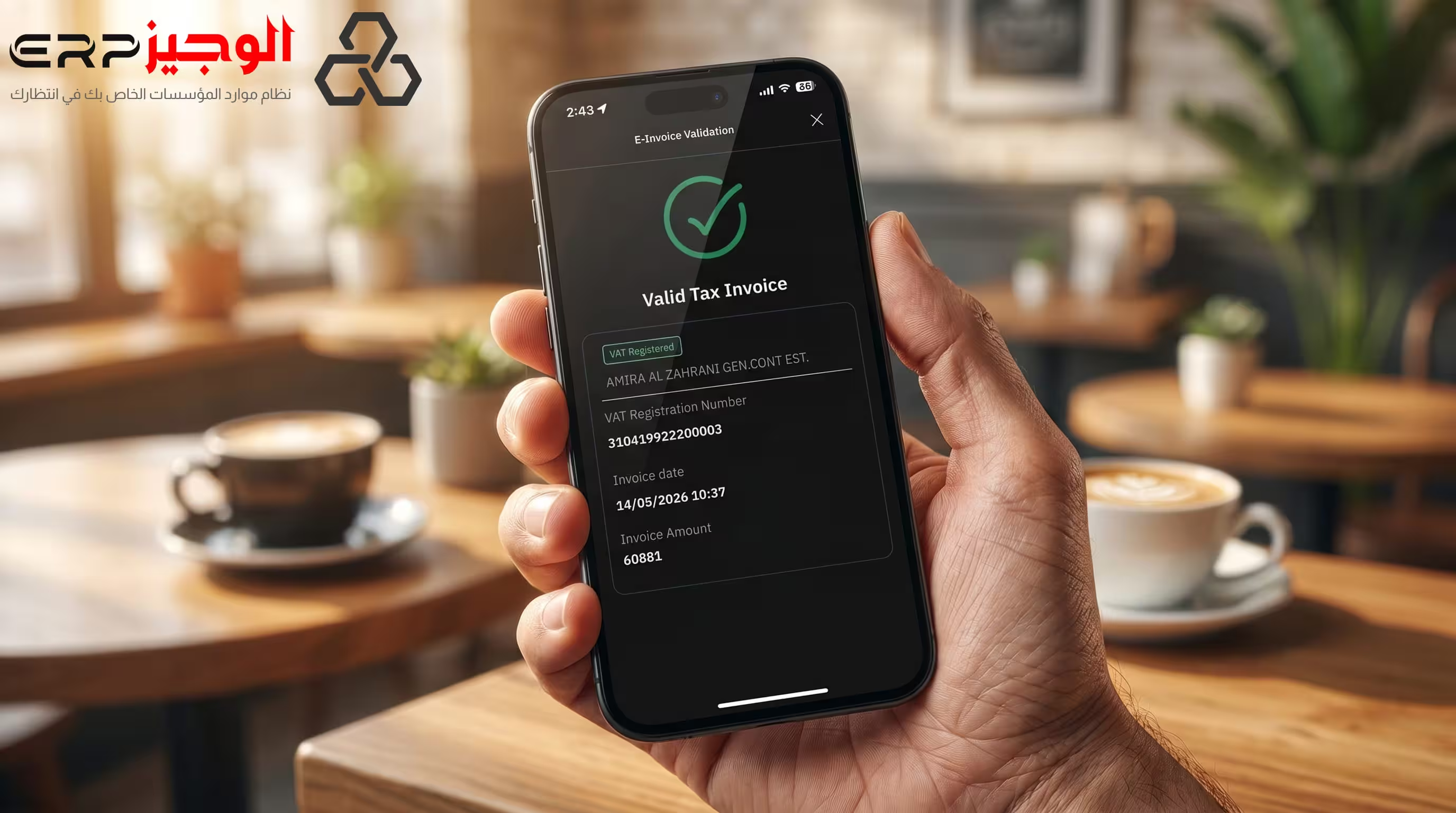
ZATCA Compliance: Online QR Code Generator & Developer Portal Integration Guide
Complete ZATCA compliance guide: generate QR codes online free, use the ZATCA developer portal for API testing, and go live with Phase 2 e-invoicing step by step.