
Cloud POS vs Offline POS for Restaurants: Which is Better in Saudi Arabia?

An offline POS system is a point-of-sale application that runs entirely on your local device without requiring an internet connection. Unlike cloud-based POS solutions, offline systems like ALZERP store all data locally on your restaurant's computer, ensuring uninterrupted service even during network outages — a critical advantage for restaurants in Saudi Arabia.
Choosing between a cloud POS and an offline POS system is one of the most important technology decisions a restaurant owner in Saudi Arabia will face. The wrong choice can mean lost orders during internet outages, unexpected monthly fees that eat into slim margins, or compliance headaches with ZATCA's evolving e-invoicing regulations. In this comprehensive guide, we compare both models head-to-head — examining costs, reliability, data ownership, ZATCA compliance, and real-world performance — so you can make an informed decision for your restaurant in Riyadh, Jeddah, Dammam, or any city across the Kingdom.
The Saudi restaurant industry is booming. With Vision 2030 driving tourism growth and entertainment sector expansion, the number of food-service establishments across the Kingdom has surged. According to industry estimates, Saudi Arabia's food-service market is projected to exceed SAR 280 billion by 2028. For restaurant owners navigating this growth, the point-of-sale system is no longer just a cash register — it's the operational backbone of the entire business. Understanding whether a cloud-based or offline POS system better serves your needs is the first step to building a resilient, profitable restaurant operation.
Figure 1: Secure PIN-based login works entirely offline
How Cloud POS Systems Work
A cloud POS system stores all restaurant data — orders, inventory counts, employee records, sales reports, and customer profiles — on remote servers accessed via the internet. When a waiter enters an order on the tablet, that data travels to a data center (often located outside Saudi Arabia), gets processed, and the confirmation returns to the device. Every transaction, every menu update, and every end-of-day report depends on this continuous data round-trip.
Cloud POS vendors typically charge on a subscription model: a monthly or annual fee per terminal, per location, or per user. These fees can start as low as SAR 200/month but quickly escalate when you add modules for table management, kitchen display systems, inventory tracking, and reporting dashboards. Over a five-year period, a single-branch restaurant can easily spend SAR 30,000–60,000 on cloud POS subscriptions — and that's before accounting for transaction processing fees that some providers layer on top.
The primary appeal of cloud POS is accessibility. Owners can check sales reports from their phone while traveling, manage multiple branches from a single dashboard, and receive automatic software updates without manual intervention. For multi-location restaurant chains with dedicated IT staff, these benefits can be genuinely valuable.
However, cloud POS systems introduce a fundamental dependency: your restaurant cannot function without a stable internet connection. If the ISP goes down, the router fails, or there's a network congestion event during peak dinner rush, your entire operation grinds to a halt. In Saudi Arabia — where summer temperatures can affect outdoor network infrastructure and where many restaurants operate in areas with inconsistent connectivity — this is not a theoretical risk. It's a daily reality for thousands of food-service businesses.
How Offline POS Systems Work
An offline POS system — also called a local POS or on-premise POS — runs entirely on hardware within your restaurant. The software is installed on a Windows desktop or laptop computer, and all data is stored in a local database on that same machine. No internet connection is required for any core operation: taking orders, processing payments, printing kitchen tickets, generating invoices, managing inventory, or producing reports.
When a cashier rings up an order on an offline POS, the data moves from the keyboard to the application to the local SQLite or SQL database — all within milliseconds, all within the four walls of your restaurant. There is no cloud server to query, no API call to wait for, and no subscription payment to maintain. The system works the moment you power on the computer, whether or not you have Wi-Fi, mobile data, or a fiber connection.
Modern offline POS solutions like ALZERP (Alwajeez POS) have evolved far beyond the clunky legacy systems of the past. Today's local POS applications offer beautiful touchscreen interfaces, real-time analytics dashboards, ZATCA-compliant invoice generation with QR codes, kitchen ticket printing, table management, and multi-user support with PIN-based authentication — all without requiring a single byte of internet bandwidth.
The financial model is equally straightforward. ALZERP, for instance, offers a one-time license fee of 1,500 SAR per branch — a lifetime purchase with no recurring monthly costs. For restaurant owners tired of watching subscription fees compound month after month, year after year, this model is transformative.
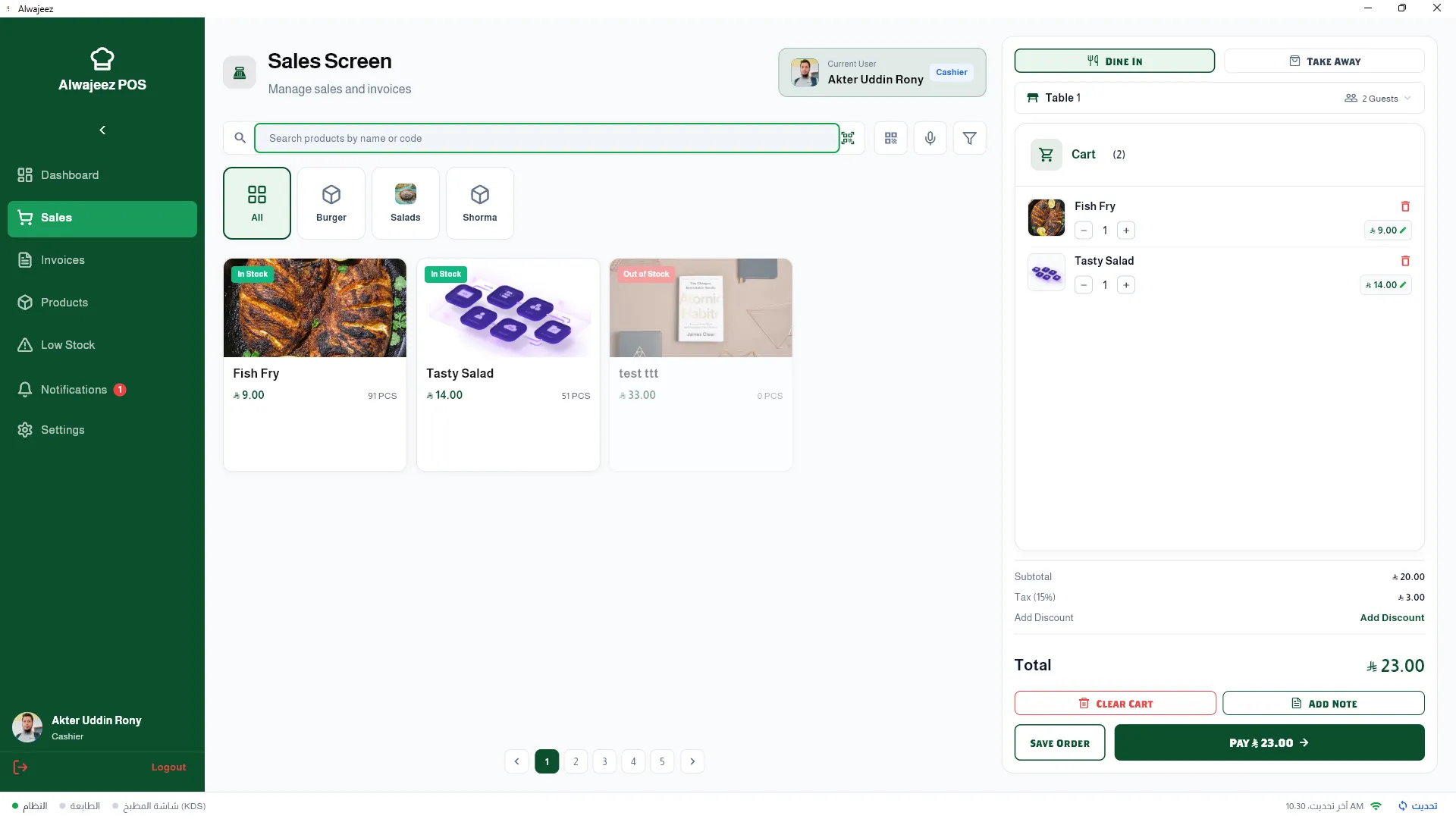
Figure 2: Complete POS functionality without internet requirement
Advantages of Cloud POS
To keep this comparison fair and balanced, let's acknowledge where cloud POS systems genuinely excel:
- Remote Access: View real-time sales data, inventory levels, and employee performance from any device with internet access, anywhere in the world.
- Automatic Updates: Software patches, feature additions, and security updates are deployed by the vendor — no manual installation required on individual machines.
- Multi-Branch Centralization: For chains with 10+ branches, cloud POS offers a unified dashboard to compare branch performance, standardize menus, and consolidate reporting.
- Lower Upfront Hardware Cost: Some cloud POS systems run on consumer tablets (iPads), which can be cheaper than dedicated POS terminals — though total cost of ownership tells a different story over time.
- Third-Party Integrations: Many cloud POS platforms offer pre-built integrations with delivery apps (HungerStation, Jahez, Marsool), accounting software, and CRM systems.
These advantages are real, and for the right type of business — a well-funded, multi-location chain with reliable enterprise-grade internet and a dedicated IT team — cloud POS can be an excellent fit.
Advantages of Offline POS
For the vast majority of Saudi restaurants — especially single-location and small-chain operations — the advantages of an offline POS system are compelling:
- 100% Uptime Regardless of Internet: Your POS never stops working because of an ISP outage, router failure, or network congestion during peak hours.
- Blazing-Fast Performance: Every operation happens locally, which means zero network latency. Order entry, invoice printing, and report generation are instantaneous.
- Complete Data Ownership: Your customer data, sales history, supplier information, and financial records stay on your hardware — not on a third-party server in another country.
- No Recurring Monthly Fees: A one-time license eliminates the cash-flow drain of monthly subscriptions. ALZERP costs 1,500 SAR per branch — once, forever.
- Enhanced Data Security: With no data transmitted over the internet, the attack surface for hackers, data breaches, and man-in-the-middle attacks is virtually eliminated.
- Privacy Compliance: Keeping data within Saudi borders aligns with the Kingdom's evolving data localization regulations under the Personal Data Protection Law (PDPL).
- Predictable Costs: No surprise price increases, no "premium tier" upsells, and no feature downgrades when you refuse to upgrade your subscription plan.
- ZATCA Phase 1 Compliance: Modern offline POS systems like ALZERP generate ZATCA-compliant invoices with TLV Base64 QR codes entirely offline — no internet needed for regulatory compliance.
Side-by-Side Comparison Table: Cloud vs Offline POS
The following table provides a detailed, at-a-glance comparison of the two approaches across the criteria that matter most to Saudi restaurant owners:
| Criteria | Cloud POS | Offline POS (ALZERP) |
|---|---|---|
| Internet Dependency | Required for all operations. Offline mode (if available) is limited and buggy. | ✅ Zero internet needed. 100% local operation. |
| Data Ownership | Data stored on vendor's servers, often outside KSA. Vendor controls access. | ✅ All data stored locally on your hardware. Full ownership. |
| Transaction Speed | Depends on internet speed. Latency of 200-800ms per operation. | ✅ Instant. Sub-10ms local database queries. |
| Monthly Cost | SAR 200–800/month per branch. Adds up to SAR 12,000–48,000 over 5 years. | ✅ One-time 1,500 SAR per branch. No recurring fees. |
| ZATCA Compliance | Supported, but requires internet for invoice validation and QR generation. | ✅ Full Phase 1 compliance offline. TLV QR codes generated locally. |
| Setup Complexity | Requires stable internet, account setup, cloud configuration, and ongoing vendor dependency. | ✅ Install on Windows 10/11, configure, and start selling. Same-day deployment. |
| Remote Access | ✅ Yes, from any device with internet. | Available via optional cloud sync (500 SAR/year). |
| Data Security | Vulnerable to cloud breaches, API exploits, and third-party data access. | ✅ Data never leaves your device. Minimal attack surface. |
| Vendor Lock-in | High. If you stop paying, you lose access to your own data. | ✅ None. Your license is permanent and your data is always accessible. |
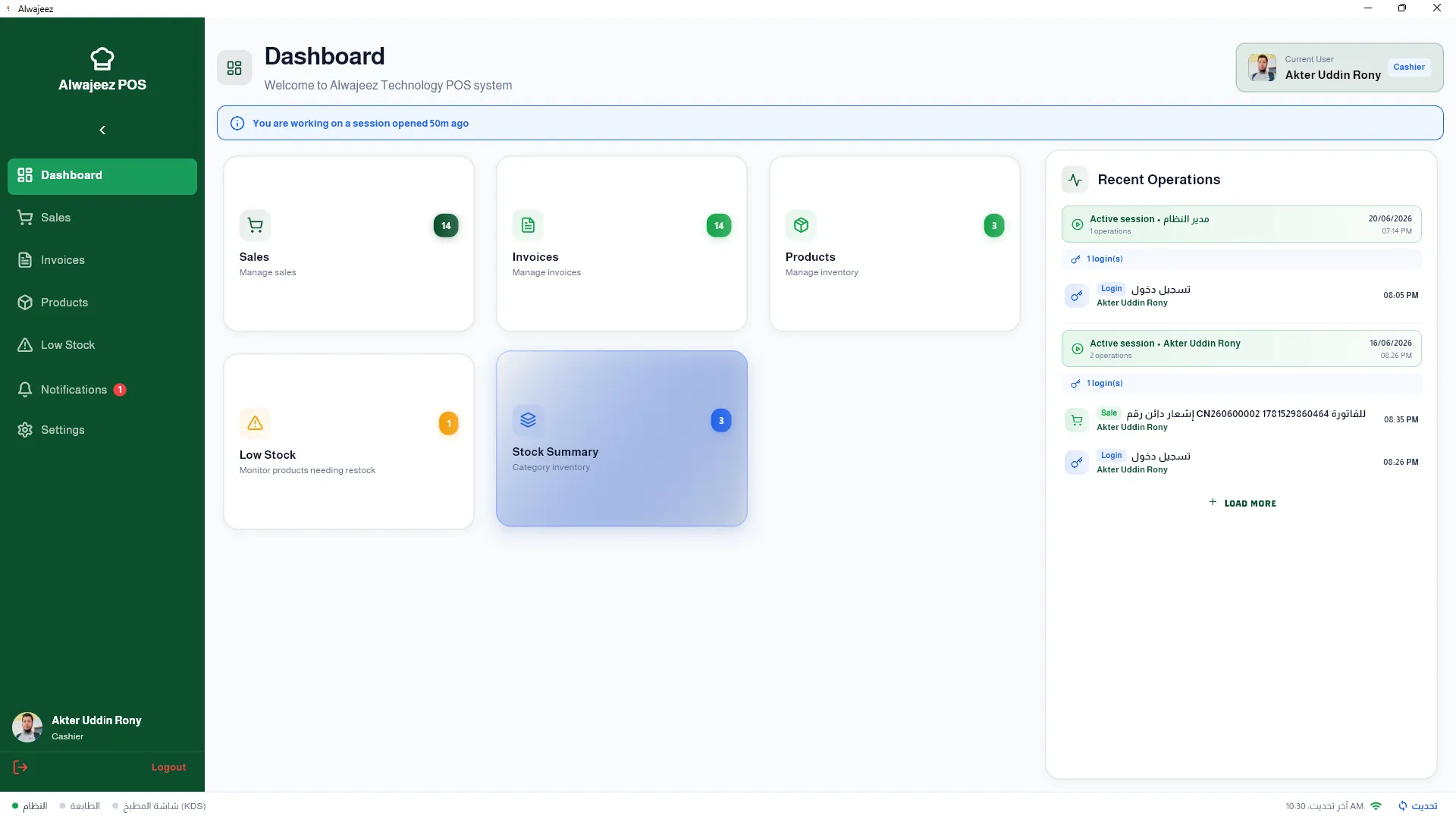
Figure 3: Real-time analytics stored locally — no cloud latency
Which Model Fits Saudi Restaurants Best?
Saudi Arabia's restaurant landscape is diverse — from high-volume shawarma shops in Riyadh's Al Olaya district to upscale fine-dining restaurants along Jeddah's Corniche, from bustling cafés in Dammam's King Fahd Street to family-owned bakeries in smaller cities like Abha and Tabuk. Each of these businesses has different operational needs, but most share one common challenge: internet reliability cannot be taken for granted.
Consider the operational reality of a typical Saudi restaurant during peak hours. Friday lunch rush, weekend family dinner service, Ramadan iftar buffets — these are the moments when your POS system must perform flawlessly. A three-minute internet outage during Friday prayer rush hour doesn't just mean a brief inconvenience; it means stacked orders, confused kitchen staff, frustrated customers, and lost revenue. With an offline POS system, this scenario simply never occurs.
Beyond connectivity, there's the financial reality. Most Saudi restaurants operate on thin margins — industry averages suggest net profit margins of 3-9% for full-service restaurants. When a cloud POS subscription costs SAR 500/month (SAR 6,000/year), that's revenue that could go toward better ingredients, staff training, or marketing. ALZERP's one-time 1,500 SAR license pays for itself in three months compared to most cloud POS subscriptions.
Data sovereignty is another increasingly important factor. Saudi Arabia's Personal Data Protection Law (PDPL), enforced by the Saudi Data and AI Authority (SDAIA), imposes strict requirements on how personal data is collected, stored, and transferred. When your cloud POS stores customer data on servers in the United States or Europe, you introduce cross-border data transfer complexities that an offline system avoids entirely.
For the majority of Saudi restaurants — the single-location establishments, the 2-3 branch small chains, the newly opened restaurants watching every riyal — an offline POS system is the pragmatic, cost-effective, and risk-minimizing choice. The technology has matured to the point where you sacrifice nothing in terms of features while gaining everything in terms of reliability and cost savings.
Why Many Restaurant Owners Prefer Local POS Systems
The shift toward local POS systems among Saudi restaurant owners isn't accidental — it's driven by hard-learned lessons and practical considerations:
1. The Internet Outage Experience: Almost every restaurant owner who has used a cloud POS has a horror story about the day the internet went down during peak service. Orders lost, kitchen chaos, customers walking out. Once you've lived through that, the appeal of an offline system that simply works becomes irresistible.
2. Subscription Fatigue: Saudi business owners are increasingly wary of the SaaS (Software-as-a-Service) model, where you never truly own the software you depend on. Monthly payments feel like rent on your own business tools. A one-time purchase provides psychological and financial peace of mind.
3. Speed That Customers Notice: In a fast-paced restaurant environment, milliseconds matter. The difference between a local database query (sub-10ms) and a cloud API call (200-800ms) is imperceptible to a developer but immediately noticeable to a cashier processing 200 orders per shift. Offline POS systems feel snappier, and that speed translates directly to shorter customer wait times and higher throughput.
4. Simplicity of IT Management: Cloud POS systems require ongoing IT maintenance — monitoring internet uptime, managing user accounts through web portals, troubleshooting sync issues, dealing with vendor-side outages. An offline POS is self-contained. If the computer works, the POS works. For restaurant owners who are chefs and hospitality professionals (not IT managers), this simplicity is invaluable.
5. Long-Term Cost Certainty: Cloud POS vendors frequently raise prices — often with just 30 days' notice. When your total cost of ownership is a one-time 1,500 SAR, there are no surprise price hikes, no "premium feature" upsells, and no risk of losing access to your data because your credit card expired.
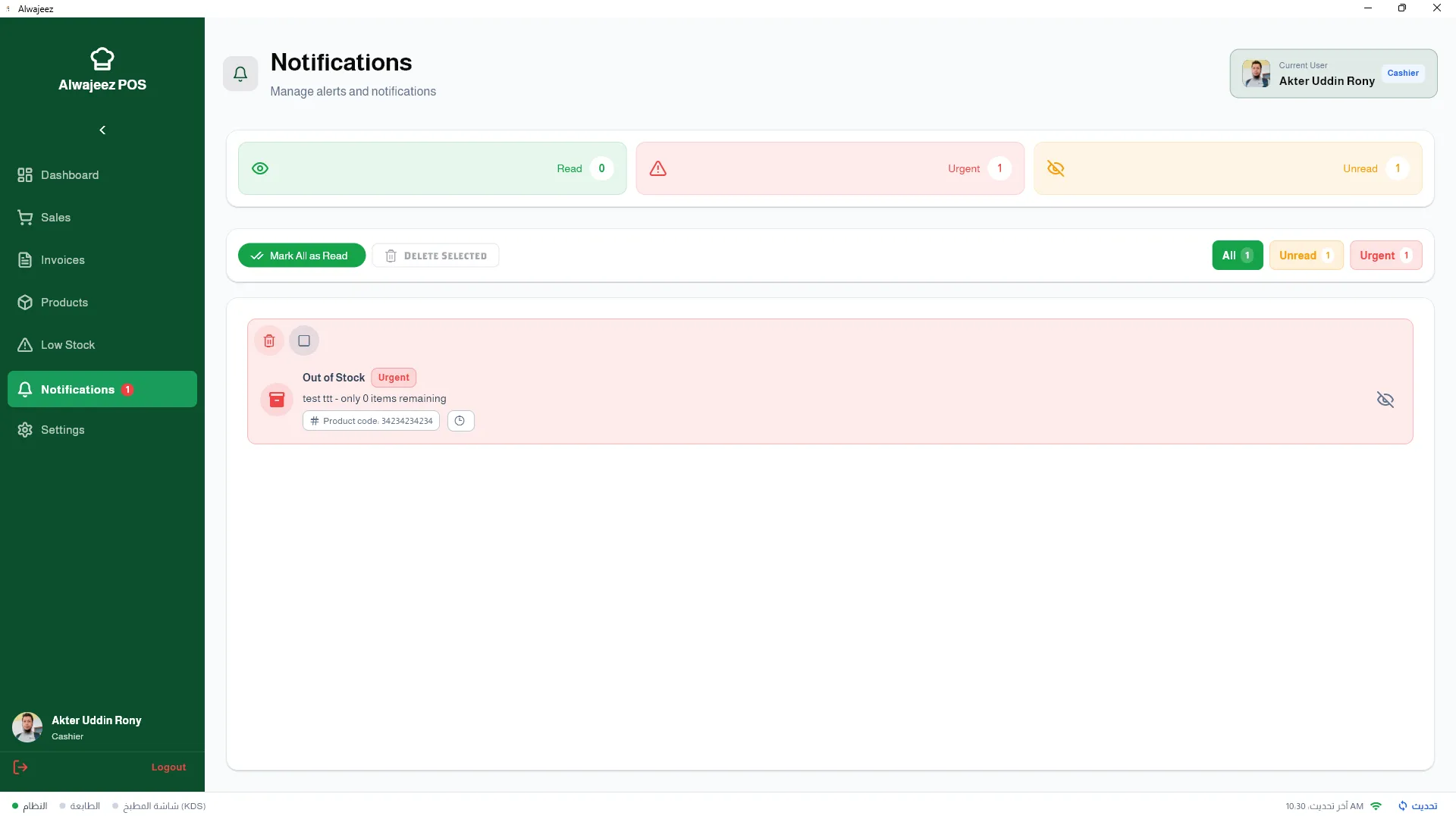
Figure 4: Instant notifications without internet dependency
How ALZERP Bridges the Gap: Offline-First with Optional Cloud
ALZERP (Alwajeez POS) represents a new category of restaurant management software: offline-first with optional cloud connectivity. This hybrid approach gives restaurant owners the best of both worlds without the compromises of either pure model.
The Offline Foundation: At its core, ALZERP is a Windows 10/11 desktop application powered by a local SQLite database. Every feature — from the restaurant sales screen and table management (supporting up to 20 tables) to kitchen ticket printing, open order management, and comprehensive reporting — works without any internet connection. Built with Flutter (Dart), the application delivers a modern, responsive Arabic-first interface with full English language support.
The Cloud Option: For restaurant owners who want remote access to their data — checking sales reports from home, monitoring inventory levels while traveling, or managing multiple branches — ALZERP offers an optional cloud subscription at 500 SAR/year. This is not a requirement; it's an enhancement. Your restaurant's day-to-day operations never depend on it.
ZATCA Compliance Without Compromise: ALZERP generates fully ZATCA Phase 1 compliant invoices with TLV Base64 QR codes entirely offline. There is no need for an internet connection to produce tax-compliant invoices, which means your ZATCA compliance is never at risk — even in areas with unreliable internet coverage.
Complete ERP Integration: Unlike standalone POS systems that only handle sales, ALZERP includes a full ERP suite — accounting, warehouse management, HR/payroll modules — all running locally. This means your restaurant's financial books, inventory tracking, and employee management are integrated into a single system, eliminating the need (and cost) of separate software subscriptions for each function.
Security by Design: With PIN-based multi-user authentication, local data storage, and no data transmission over the internet, ALZERP's security model is inherently stronger than cloud-based alternatives. Your customer data, financial records, and business intelligence never leave your premises unless you explicitly choose to sync them to the cloud.
For restaurant owners in Riyadh, Jeddah, Dammam, and across the Kingdom, ALZERP delivers a complete restaurant management solution that prioritizes what matters most: reliability, speed, data ownership, and profitability.
📄 Download Sample Documents (PDF)
See how ALZERP generates ZATCA-compliant invoices entirely offline.
Frequently Asked Questions
What happens if internet goes down in a restaurant?
If your restaurant uses a cloud POS, an internet outage means you lose the ability to process orders, print receipts, and access sales data — potentially for hours. With an offline POS system like ALZERP, nothing happens; the system continues operating normally because it does not depend on internet connectivity for any core function.
Is cloud POS better than offline POS?
It depends on your specific needs. Cloud POS excels at remote multi-branch management and automatic updates. However, for most Saudi restaurants — especially single-location establishments — an offline POS system offers superior reliability, lower total cost of ownership, faster performance, and stronger data security. Neither is universally "better"; the right choice depends on your operational priorities.
Can a restaurant operate without internet?
Absolutely. With an offline POS system like ALZERP, a restaurant can handle every operational task — order entry, kitchen ticket printing, invoice generation, inventory management, and sales reporting — without any internet connection. Thousands of restaurants in Saudi Arabia operate successfully with local POS systems.
Which POS system is best for Saudi restaurants?
The best POS system for Saudi restaurants combines offline reliability, ZATCA Phase 1 compliance, Arabic-first design, and affordable pricing. ALZERP meets all these criteria with a one-time 1,500 SAR license, full offline operation, and built-in TLV QR code generation for tax-compliant invoices.
Can an offline POS generate ZATCA-compliant invoices?
Yes. ALZERP generates fully ZATCA Phase 1 compliant invoices with TLV Base64-encoded QR codes entirely offline. The QR code is computed locally on your device without any need for internet access, ensuring regulatory compliance even in areas with no network coverage.
Whether you're opening your first restaurant in Riyadh or expanding an established brand in Jeddah, the choice between cloud and offline POS comes down to priorities. If uninterrupted service, data ownership, and predictable costs matter to your business, an offline POS system like ALZERP is the smart investment. Try ALZERP's offline POS free — request a demo today.