The Ultimate Guide to ZATCA E-Invoicing Integration with ERP Systems
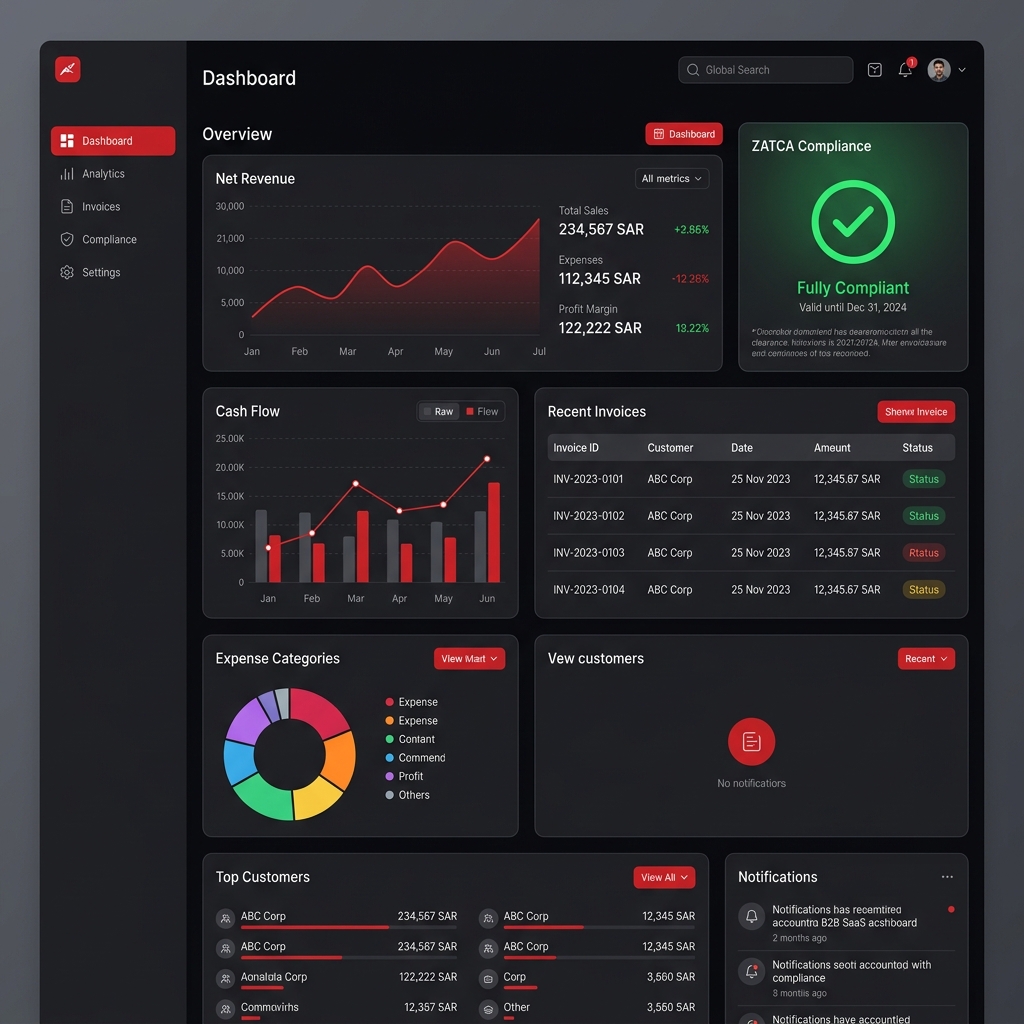
Navigating the "Fatoora" Mandate Seamlessly
The introduction of the electronic invoicing project ("Fatoora") by the Zakat, Tax and Customs Authority (ZATCA) has fundamentally shifted how businesses in Saudi Arabia operate. Gone are the days of manual, paper-based billing. Today, achieving compliance—particularly the rigorous requirements of Phase 2 (Integration Phase)—requires a robust ZATCA e-invoicing ERP solution that can seamlessly bridge your business operations with government tax portals.
Integration is no longer optional; it is the law. Businesses failing to implement compliant e-invoicing systems face severe operational disruptions and hefty financial penalties. But compliance shouldn't mean slowing down your business. By integrating ZATCA requirements natively into your Cloud ERP, you transform a regulatory burden into a powerful engine for digital transformation.
Phase 1 vs. Phase 2: What You Need to Know
Understanding the distinction between the two ZATCA phases is critical for selecting the right software:
-
Phase 1 (Generation Phase):
This initial phase required businesses to stop generating handwritten or manually typed invoices. All invoices had to be generated electronically through an approved system, complete with a basic QR code for B2C transactions. While many simple POS systems met this requirement, they fell short for the next phase.
-
Phase 2 (Integration Phase):
This is where the true technical challenge lies. Phase 2 requires your ERP or accounting system to directly integrate with the ZATCA portal via APIs. Every B2B invoice must be cleared (cryptographically stamped by ZATCA) before being sent to the buyer, and B2C invoices must be reported within 24 hours.
Why ALZ ERP is the Premier Choice for ZATCA Compliance
Many businesses attempt to use "middleware" to connect their outdated accounting software to ZATCA. This approach is costly, prone to data syncing errors, and adds unnecessary complexity to your IT infrastructure.
ALZ ERP takes a different approach: Native Compliance. Our system is built from the ground up for the Saudi market.
- Direct API Integration: No third-party middleware required. ALZ ERP communicates directly with the ZATCA Fatoora portal.
- Automated Cryptographic Stamping: The system automatically handles the complex XML formatting, UUID generation, and cryptographic hashing required for clearance.
- Phase 2 Ready QR Codes: Automatically generates the required dynamic Base64 encoded QR codes containing all mandatory TLV (Tag-Length-Value) data.
- Offline Capabilities: For retail operations, our POS module can continue operating offline and automatically sync/report to ZATCA once the internet connection is restored, ensuring business continuity.
Upgrade Your Financial Infrastructure Today
Don't risk ZATCA penalties. Ask about our Cloud ERP Solutions, pricing, or any of your enterprise requirements. Discover how Alwajeez Tech can drive your digital transformation.
Alwajeez Tech, Al-Madinah Al-Munawarah Rd, Ash-Sharafeyah District-3, Jeddah, Saudi Arabia
Last updated: 2026-05-02 09:00 KSARelated Articles
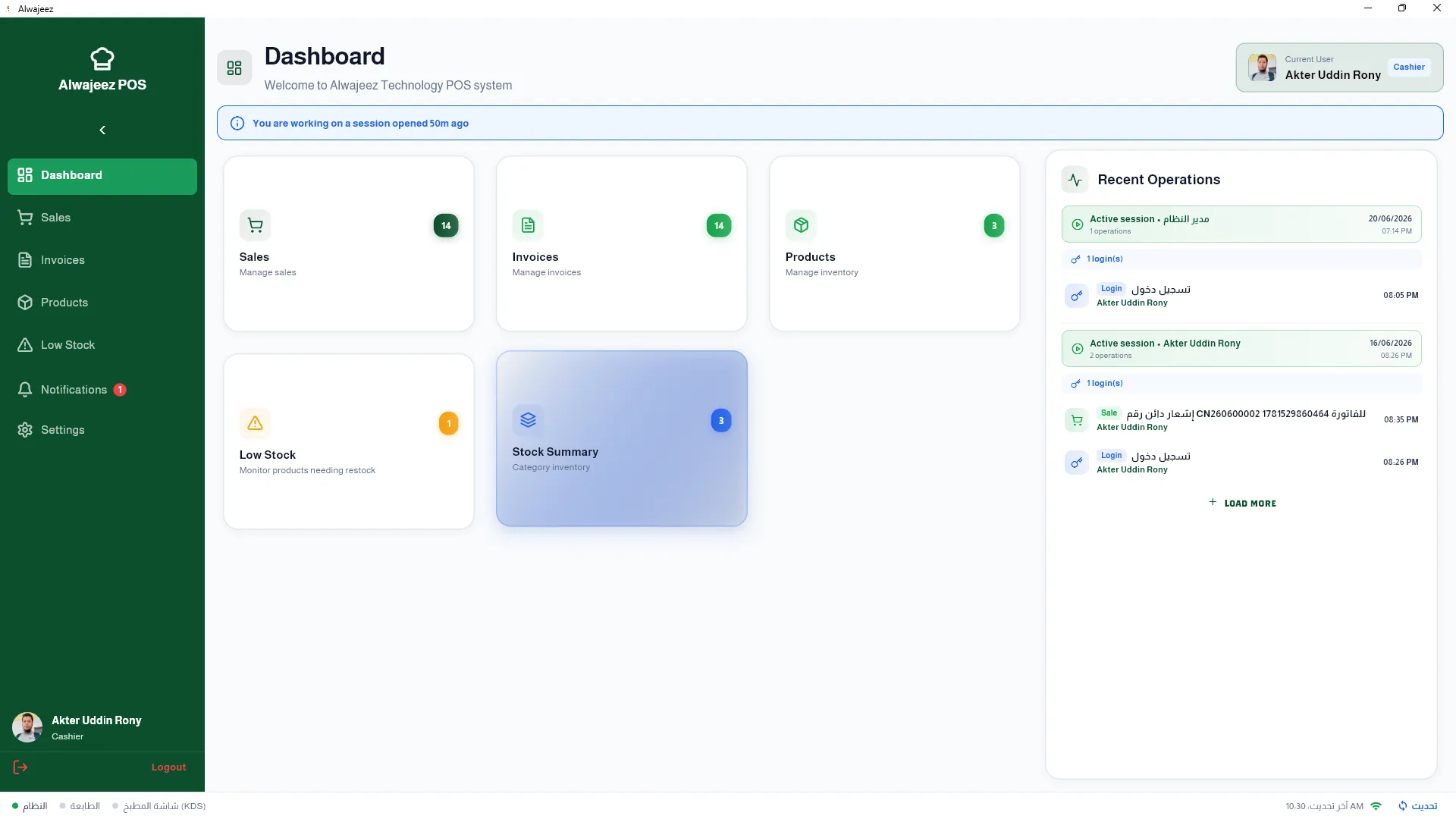
Local vs Cloud Restaurant POS in Saudi Arabia – 1500 SAR One-Time vs 500 SAR/Year
Compare on-premise (1,500 SAR one-time) vs cloud (500 SAR/year) restaurant POS systems in Saudi Arabia. Discover TCO, data control, and franchise benefits.
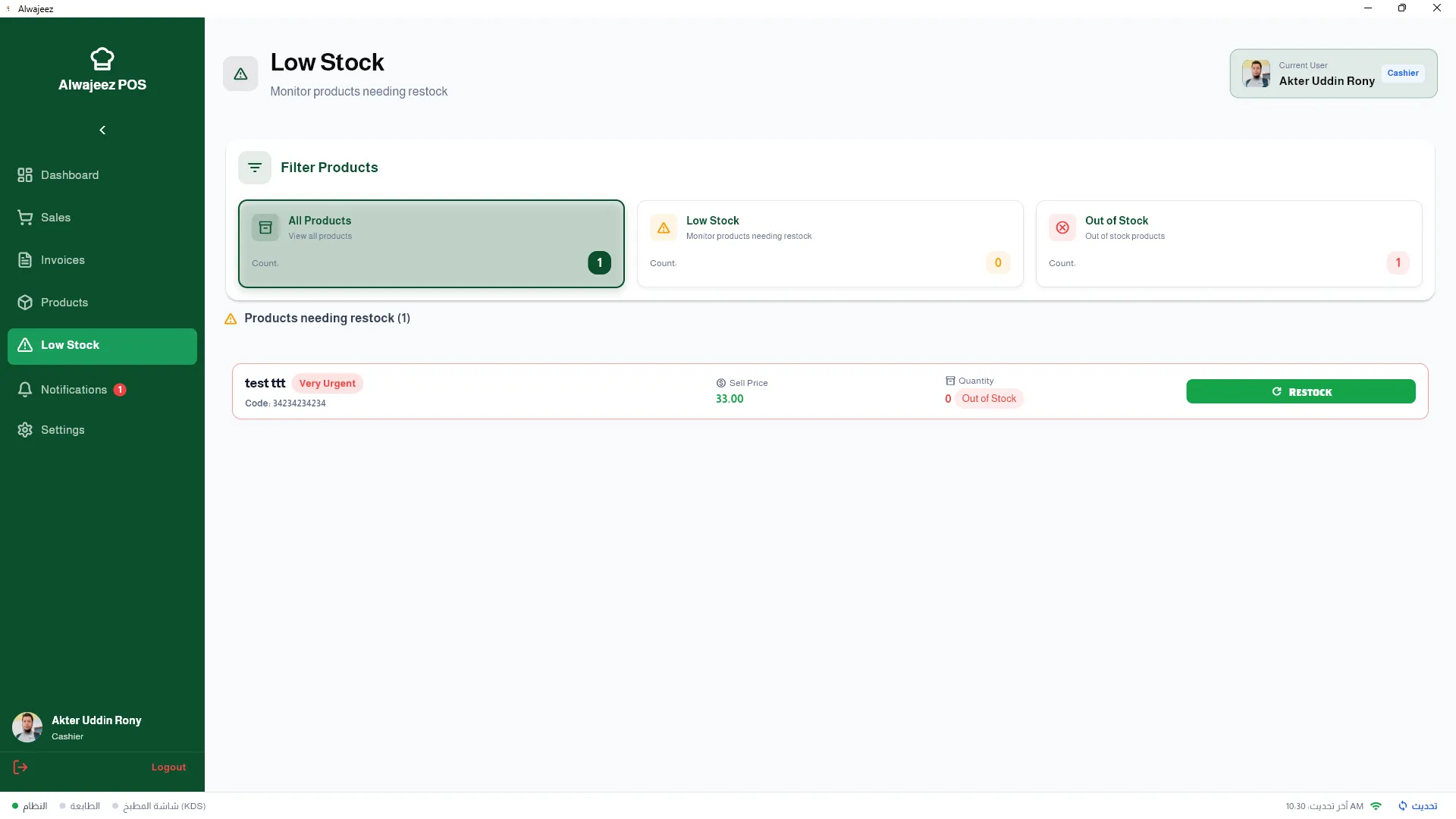
Multi-Branch Restaurant POS & ERP Software in Saudi Arabia – Centralised Accounting
Manage 2 to 50+ restaurant branches in KSA with ALZERP's integrated multi-branch POS & ERP. Learn about centralised inventory, stock transfers, and P&L by branch.
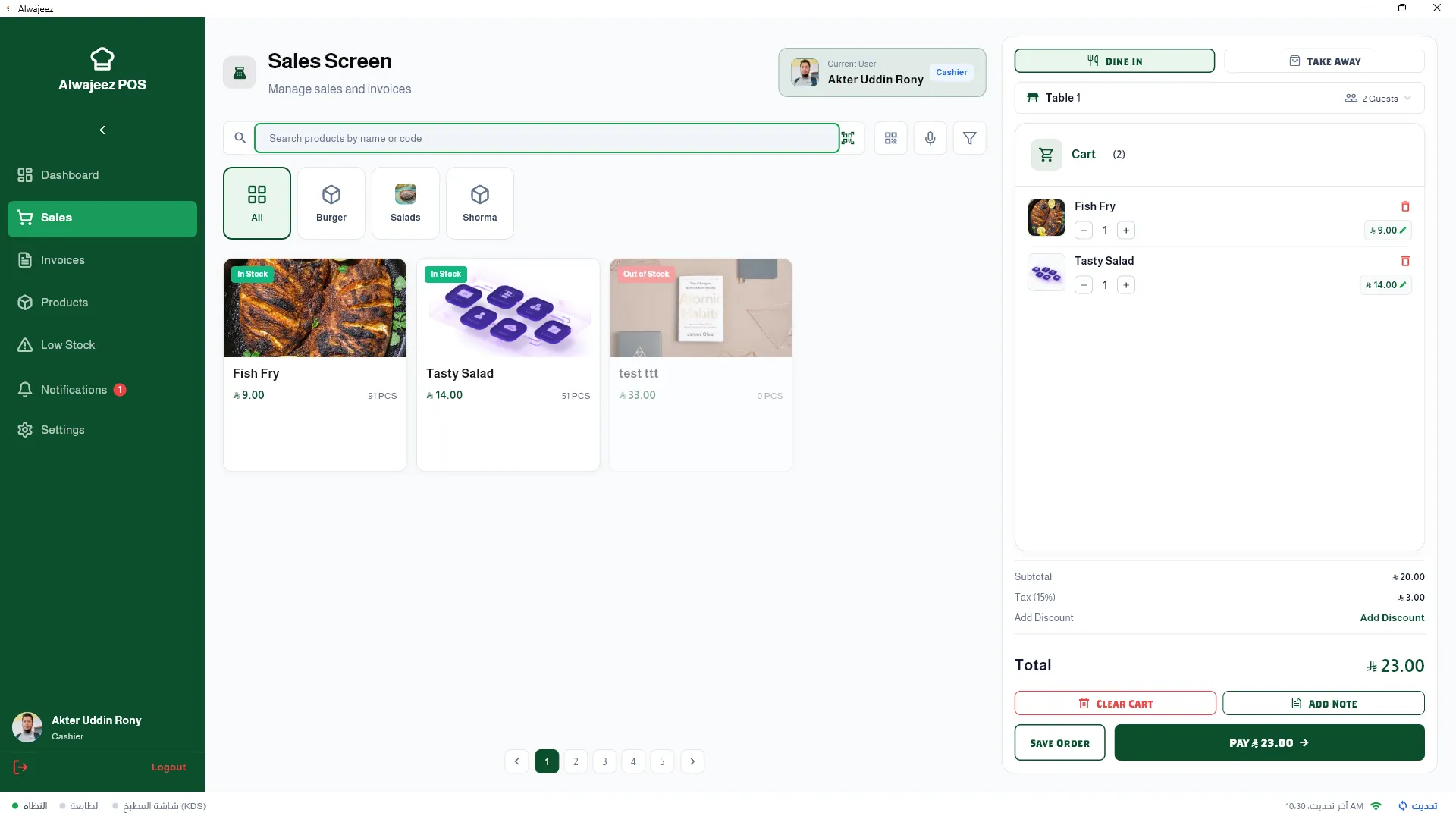
Restaurant POS with Full ERP Integration in Saudi Arabia – Multi-Branch & Accounting
Discover why Saudi restaurants need an ERP-integrated POS system. Learn about ALZERP's multi-branch support, automatic accounting, and ZATCA compliance.