How to Choose a POS System in Saudi Arabia that is ZATCA-compliant

How to Choose a POS System in Saudi Arabia that is ZATCA-compliant
For retailers in the Kingdom of Saudi Arabia, the checkout counter is more than just a place where transactions happen—it's now a hub of digital compliance. With the Zakat, Tax and Customs Authority (ZATCA) enforcing the "Fatoora" project, every retail transaction must meet strict electronic invoicing standards. Choosing a POS system Saudi Arabia ZATCA compliant solution is critical for avoiding penalties and ensuring your retail operation runs smoothly across Riyadh, Jeddah, Dammam, and other regions.
What this article covers
- Why Saudi retailers need a compliant POS system
- Key ZATCA requirements for Point of Sale (POS) software
- Essential features to check before purchasing a retail POS
- The benefits of POS and ERP integration
- Handling offline and online sales synchronization
- Frequently Asked Questions (FAQ)
Why Saudi retailers need a compliant POS system
The "Fatoora" mandate by ZATCA has fundamentally changed how commercial transactions are recorded in KSA. Whether you run a single boutique, a supermarket, or a large retail chain, you are legally required to issue electronic invoices. A compliant POS system ensures that every receipt generated includes the mandatory data elements and a valid QR code. Non-compliance can lead to significant fines and legal complications, making it essential to select a tool designed specifically for the Saudi market.
ZATCA POS requirements (Phase 2 Focus)
If your business is transitioning into Phase 2 (the Integration Phase), your POS system must do more than just print receipts. It needs to:
- Generate Cryptographic Stamps: Every B2C invoice must be reported to ZATCA, and the POS needs to handle the cryptographic signatures required by the authority.
- Issue Universal Unique Identifiers (UUID): Every transaction must have a unique identifier that cannot be duplicated or modified.
- Include Mandatory QR Codes: The QR code on the receipt must contain specific fields as defined by ZATCA, including the seller's name, VAT registration number, timestamp, invoice total, and VAT total.
- Prevent Prohibited Functions: A compliant POS must not allow for the deletion of invoices, creation of multiple invoice sequences, or modification of transaction history.
Essential features to check before buying
When evaluating a POS system Saudi Arabia ZATCA solution, look for these advanced features:
1. Seamless VAT Calculation
The system should automatically calculate VAT for all items based on Saudi tax laws, handling standard, zero-rated, and exempt categories without manual intervention.
2. Multi-Branch Management (متعدد الفروع)
If you operate stores in different cities like Riyadh and Jeddah, you need a central dashboard to monitor sales, inventory, and compliance across all locations in real-time.
3. Integrated Payment Gateways
A modern POS should link directly to Mada, Visa, and Mastercard terminals to reduce entry errors and speed up the checkout process.
4. Robust Inventory Tracking
The POS should sync instantly with your warehouse data, alerting you to low stock and helping prevent lost sales due to out-of-stock items.
The benefits of POS and ERP integration
A standalone POS system is a start, but integrating it with an ERP (Enterprise Resource Planning) system like ALZ ERP provides total business visibility. When your POS "talks" to your accounting, purchasing, and HR modules:
- Financial reports are updated instantly.
- Procurement is automated based on real-time sales data.
- Tax filing becomes a one-click process.
- You gain deep insights into profit margins and customer behavior.
Handling offline and online sales synchronization
In Saudi Arabia, reliable internet is common but outages can still happen. A superior POS system must have an "Offline Mode." This allows you to continue selling and issuing compliant receipts even without a connection. Once the internet returns, the system should automatically "report" those transactions to ZATCA to remain within the 24-hour compliance window.
FAQ
Is a simple receipt printer enough for ZATCA compliance?
No. Compliance requires the software generating the data to be ZATCA-compliant. The software must generate specific XML tags and cryptographic signatures that a simple printer cannot do on its own.
How does the POS system handle Phase 2 integration?
In Phase 2, your POS system connects via an API to ZATCA's Fatoora portal. It "reports" simplified tax invoices (B2C) to the portal automatically.
Can I use a generic international POS system?
Most international POS systems are not localized for Saudi Arabia. They lack the specific QR code structures and XML reporting formats required by ZATCA. It is highly recommended to use a system like ALZ ERP that is built specifically for the KSA market.
What is the penalty for using a non-compliant POS?
Fines for non-compliance with ZATCA's e-invoicing regulations can be severe, often starting at SAR 5,000 for the first violation and increasing significantly for repeat offenses.
Final CTA
Don't leave your retail business vulnerable to compliance risks. Upgrade to a modern, unified solution that combines retail power with legal certainty. ALZ ERP offers a fully localized POS system that is Phase-2 ready, helping you manage your stores in Riyadh, Jeddah, and across the Kingdom with ease.
Contact us today for a free demo and see how ALZ ERP can transform your retail operation.
Related Articles
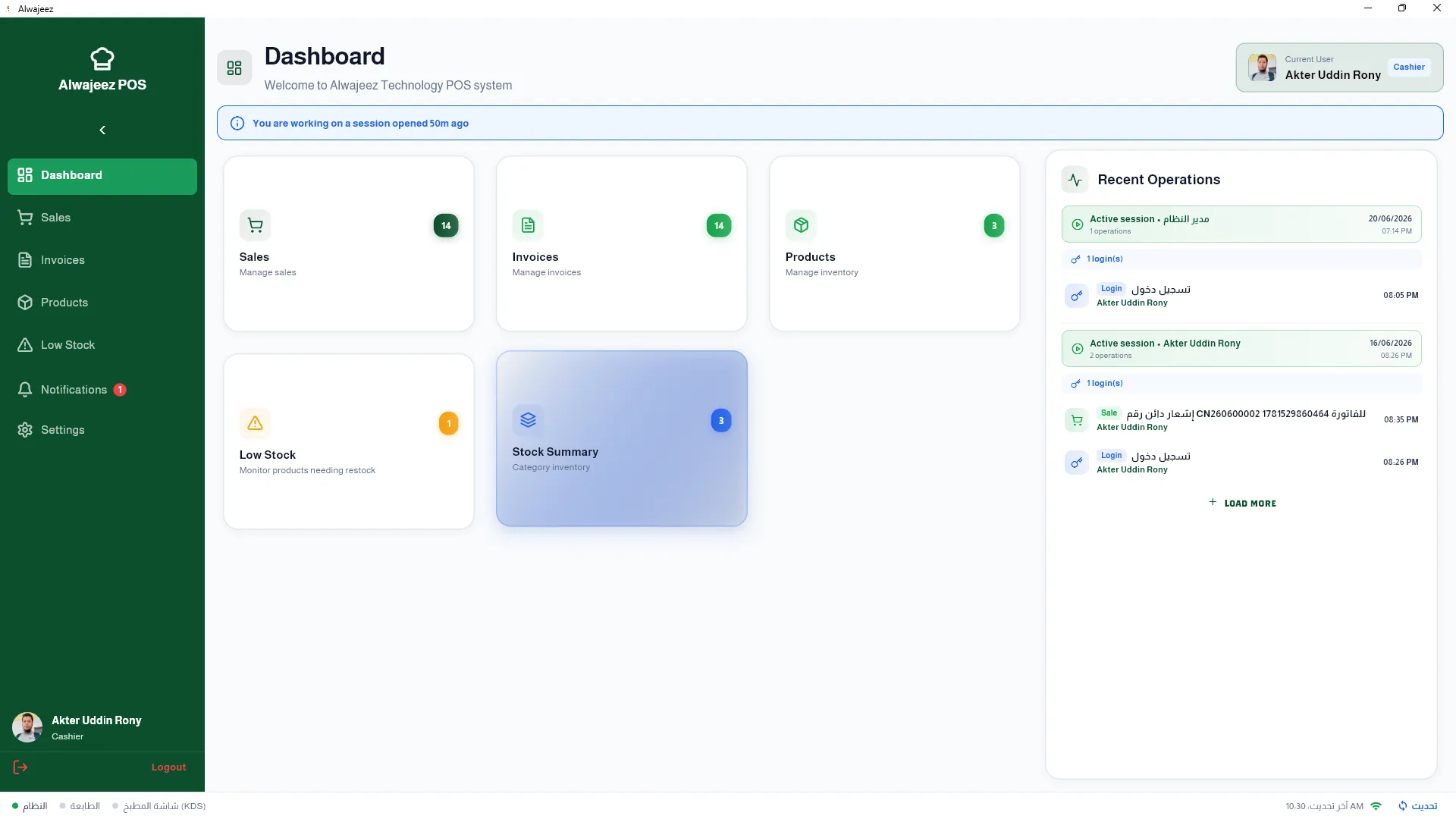
Local vs Cloud Restaurant POS in Saudi Arabia – 1500 SAR One-Time vs 500 SAR/Year
Compare on-premise (1,500 SAR one-time) vs cloud (500 SAR/year) restaurant POS systems in Saudi Arabia. Discover TCO, data control, and franchise benefits.
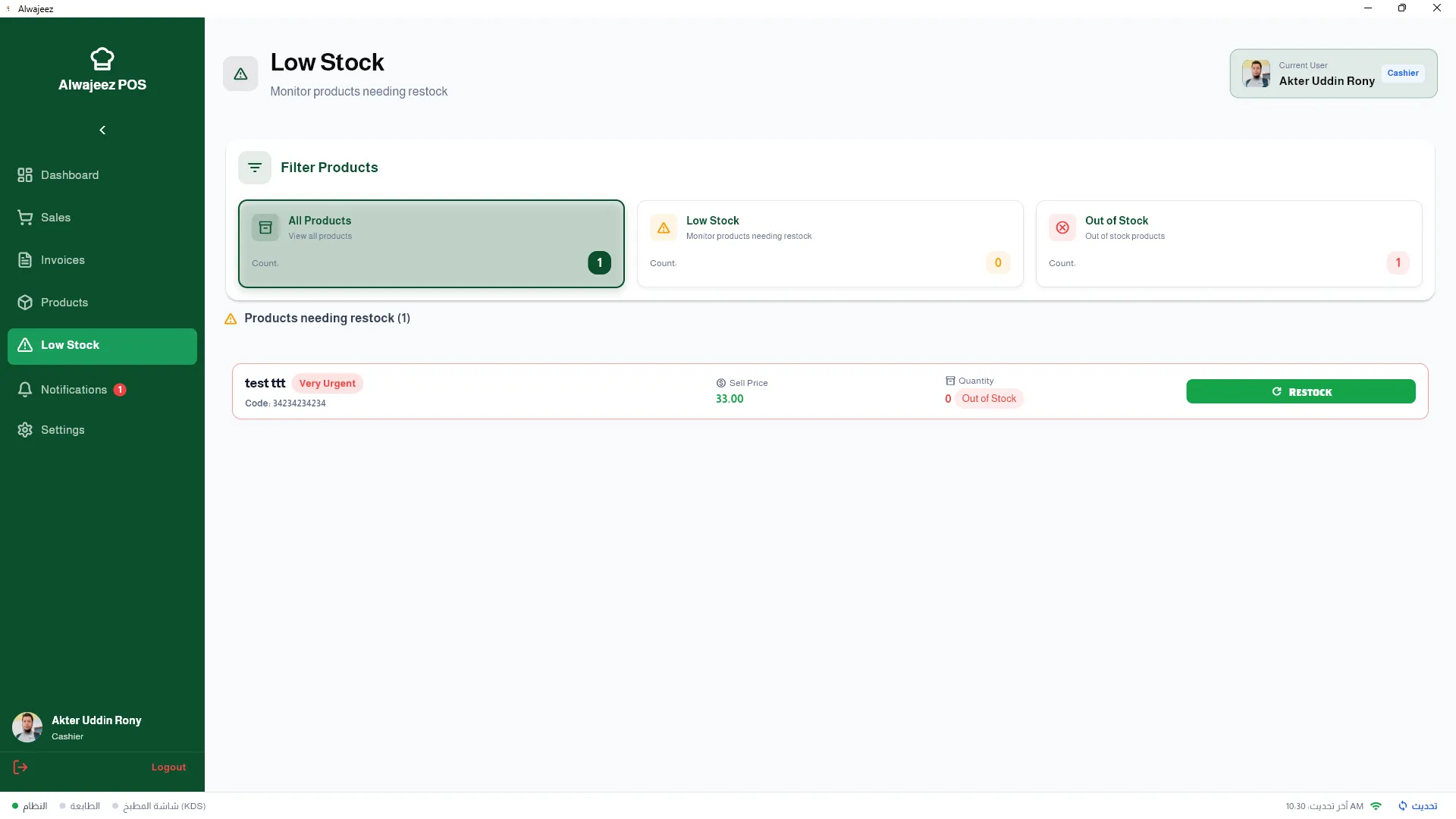
Multi-Branch Restaurant POS & ERP Software in Saudi Arabia – Centralised Accounting
Manage 2 to 50+ restaurant branches in KSA with ALZERP's integrated multi-branch POS & ERP. Learn about centralised inventory, stock transfers, and P&L by branch.
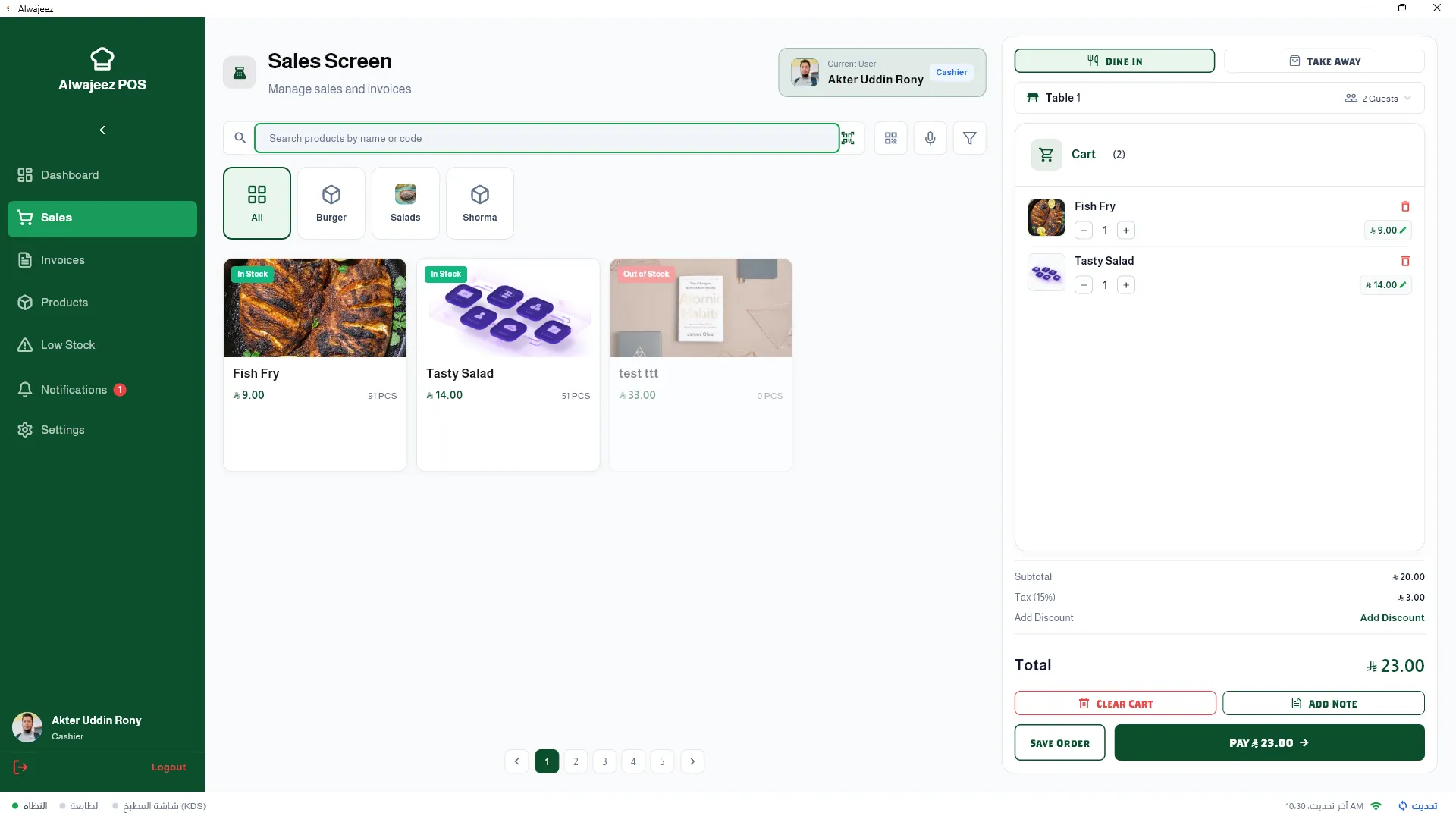
Restaurant POS with Full ERP Integration in Saudi Arabia – Multi-Branch & Accounting
Discover why Saudi restaurants need an ERP-integrated POS system. Learn about ALZERP's multi-branch support, automatic accounting, and ZATCA compliance.